High speed 300/600m/min Ribbed Rebar Machine
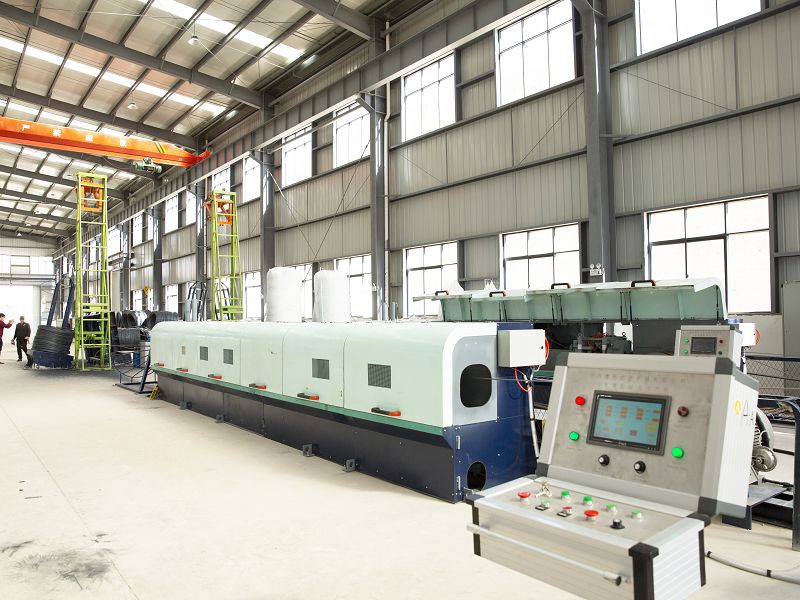
Hebei Hylite Machinery Co., Ltd. is located in the center of the Beijing-Tianjin-Hebei economic & technological region - Xianxian Economic Development Zone, where is the birthplace of motto "Seeking Truth From Facts". The factory covers an area of 50 acres. We are engaged in the R&D, manufacturing and sale service of equipment for steel bar and metallic wire processing.
Our address
Xianxian Economic DevelopmentZone, Cangzhou City, HebeiProvince
Phone Number
008615130775601
cnhylite001@hylitemachinery.com

Why Choose Us
Hebei Hylite Machinery Co., Ltd. is located in the center of the Beijing-Tianjin-Hebei economic & technological region - Xianxian Economic Development Zone, where is the birthplace of motto "Seeking Truth From Facts".
Products Sell Well
Our products have been exported to more than 60 countries including Togo, South Korea, Vietnam, Cambodia, Thailand, Malaysia, Philippines, Indonesia, India, Pakistan, Iran, Saudi Arabia, Russia, Egypt, Senegal, Mali, Benin, Niger, Venezuela, Argentina, Algeria, Mozambique, Mauritius etc.
Professional Team
The factory covers an area of 50 acres. We are engaged in the R&D, manufacturing and sale service of equipment for steel bar and metallic wire processing. The R&D team mainly composed of Chinese and Italian designers. It has a professional global after-sales service team.
Quality Assurance
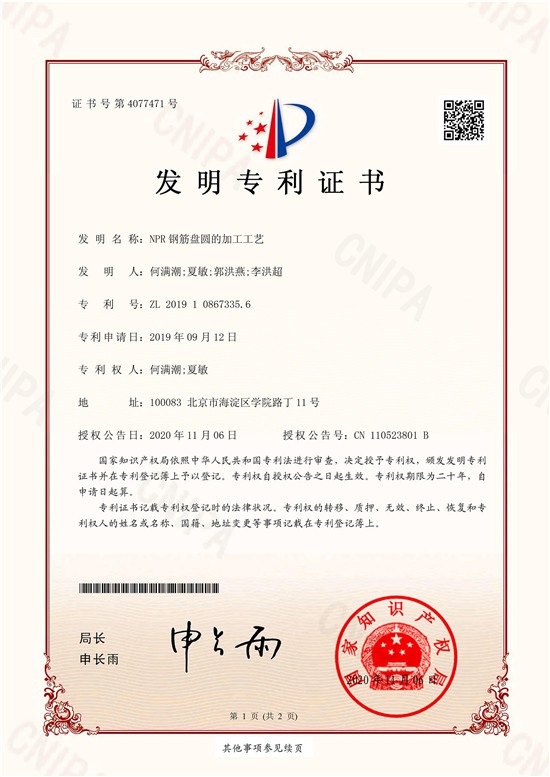
The company has passed ISO9001 quality management system and got its CE certification. It is a certified high-tech enterprise in Hebei Province, China.
After-Sales Service
Provide customers with a full range of technical services and support, provide customers with on-site installation guidance free of charge, and train personnel to familiarize themselves with the operation and use of the equipment. If there are quality abnormalities in the equipment, we will provide 24-hour after-sales service to customers.


Products Description


Cassette Type Ribbed Rebar Machine With Straightening And Cutting is a highly efficient and versatile production line for the manufacturing of ribbed steel bars. We manufacture the machine with exceptional performance and reliability. Our products are designed to improve productivity, reduce labor costs, and increase the quality of end-products.

Ribbed rebar provides better adhesion with concrete, which contributes to a more durable reinforced concrete structure. The ribbed structure allows the concrete to adhere better to the rebar, which increases the safety of the structures by reducing the risk of slippage. The metal used is actually steel. If you want to know the specifications and prices of Intelligent Take-up Unit, please contact us!
Increased Strength
The cold-working process induces compressive stresses in the threaded region, enhancing the strength of the material. Rolling threads typically creates a stronger component than the thread cutting process.
Improved Fatigue Resistance
Thread rolls exhibit better fatigue resistance due to the compressive stresses introduced during the process.
Higher Production Rates
Thread rolling is a faster process compared to traditional threading methods, making it more efficient for high-volume production.
Cost-Effectiveness
The increased tool life and reduced material waste make rolled threads a cost-effective manufacturing solution.
Precise Thread Profiles
Rolling threads ensures consistent and accurate thread profiles, meeting tight tolerances and specifications.
How to Choose Ribbed Rebar Machine
Type of Reinforcement Bars
Consider the size, shape, and strength of the reinforcement bars you will work with. Choose a Bar bending machine manufacturer that can handle the type of reinforcement bars you need to bend.
Production Capacity
The manufacturing capacity you need for your construction projects should be determined. Pick a bar bending machine to help you fulfil your production needs and boost productivity.
Accuracy and Precision
Make sure the bar-bending machine you use delivers accurate and exact results. Doing this will reduce the possibility of errors and raise the value of your finished output.
Space and Site Constraints
Make sure the bar-bending machine should fit your construction site by taking into consideration its size. Evaluate the power supply's accessibility and the requirement for extra parts like a control panel.
Budget
Choose a Bar bending machine manufacturer that fits your budget while offering the necessary features and capabilities. Determine your budget for the machine.
Maintenance and Repair
Consider the bar bending machine's cost and ease of maintenance and repair. To save downtime, use a machine with a dependable design and easily accessible parts.
Brand Reputation
Analyze the Bar bending machine manufacturer's reputation as a brand. Pick a company with a solid track record of delivering dependable, high-quality machinery.
Safety Features
Ensure that the Bar bending machines you choose have proper Safety Features to protect the operator and other personnel.
Warranty and After-sales Service
To ensure that you have the support you require in case of trouble, select a bar bending machine manufacturer with a warranty and a robust after-sales service network.
Straight Bar Thread Rolling Machine Safety Operating Procedures

Staff Training and Assessment
●Training: Ensure all operators undergo rigorous technical training and skills assessment.
●Consistency: Maintain a consistent team to ensure uniform operation and proficiency.
Equipment Debugging and Testing
●Pre-Production: Thoroughly debug and test equipment before starting formal production to confirm proper functionality.
Steel Bar Cutting and Straightening
●Cutting: Cut steel bars so that end faces are perpendicular, free of horseshoe shapes or arches.
●Straightening: Straighten any bars with non-perpendicular ends before further processing.
Thickening Steel Bar Heads
●Preparation: Appropriately thicken steel bar heads before installing steel wires.
Pier Preparation
●Machine Zero Position: Ensure the pier roughening machine is set to zero.
●Insertion: Insert steel bars straight into the pier to maintain the reserved length.
Quality Control
●Unqualified Heads: Cut off and re-pierce unqualified pier heads; avoid re-threading.
Crack Prevention
●Thick Sections: Ensure thick steel pier sections are free from transverse cracks.
Thread Processing
●Method: Use the thread threading method for processing thick steel bar sections.
Cutting Fluid Usage
●Fluid: Use water-soluble cutting fluid for steel wire end processing.
●Antifreeze: Add antifreeze measures below 0°C.
●Avoidance: Do not use cutting fluid during thread processing.
Pre-Shift Inspection
●Checklist: Run the machine empty before each shift. Check:
Equipment condition
Rotation of the machine head
Cutting fluid levels
Electrical switch sensitivity
●Screw tightness
●Motor and reducer sounds
Equipment Maintenance
●Malfunctions: Address and eliminate equipment malfunctions promptly. Do not operate faulty equipment.
Oil Pump Maintenance
●Conditions: Perform maintenance of high-pressure oil pumps indoors in dust-free conditions to prevent oil system contamination.

Post-Shift Cleaning
●Cleaning: Clean iron filings from pier heads, fixtures, and molds. Clean the machine head and table, lubricate guide rods and rotating parts.
Trained Personnel Only
●Restriction: Allow only trained personnel to operate the equipment; untrained individuals are strictly prohibited.
Electrical Safety
●Handling: Non-electricians should not handle electrical failures in equipment.
Personal Protective Equipment (PPE)
●Helmets: Operators must wear safety helmets on construction sites at all times.
Clothing Safety
●Attire: Operators should not wear gloves. Ensure sleeves are tied tightly and clothes buttons are fastened.
Adherence to Regulations
●Compliance: Follow safety management regulations and on-site construction unit rules at all times.
Safety Education
●Training: Conduct regular safety education sessions for operators to enhance safety awareness and promptly address safety hazards.
Applications of Ribbed Rebar Machine
Reinforcement in Concrete Structures
In large-scale construction projects like bridges, high-rise buildings, and dams, steel bars are embedded in concrete to provide reinforcement. Using a threading machine allows for the creation of threaded ends on rebar, which can then be joined with couplers. This provides a strong mechanical connection, eliminating the need for overlap splicing and thereby reducing material waste.
Prefabrication of Steel Reinforcement Components
Threading machines are used to thread steel bars that will be used in prefabricated construction components. These prefabricated segments, such as columns, beams, or panels, can be connected through threaded steel bars and couplers, ensuring alignment and strength in assembly. This facilitates rapid on-site installation, reducing construction time.
Improved Structural Integrity in Seismic Zones
In regions prone to earthquakes, the integrity of connections between structural elements is critical. Threaded steel bars, used with couplers, provide stronger and more reliable connections compared to traditional welding or lapping methods. This ensures that the structure can better resist seismic forces, improving safety and longevity.
Reducing Labor and Welding
Traditional methods of connecting steel bars, such as welding or lap splicing, can be labor-intensive and time-consuming. By using a steel bar threading machine, workers can quickly create threaded ends that can be connected with couplers. This reduces the need for specialized welding labor, lowers construction time, and minimizes safety hazards associated with welding on-site.
Modular and Demountable Structures
For temporary structures, such as scaffolding, formworks, or exhibition halls, threaded steel bars allow for easy assembly and disassembly. The threaded connections can be quickly engaged or disengaged, making the construction process more efficient, while also allowing for the reuse of materials in future projects.
High-Load Industrial Applications
In industries like oil and gas, heavy machinery, and infrastructure, steel bars are often subjected to high loads. Threaded bars provide a secure method for joining elements, ensuring that the assembly can withstand the demanding operational requirements. This is crucial in equipment foundations, pipelines, and other heavy-load-bearing structures.
Expansion and Retrofitting of Structures
When retrofitting or expanding existing structures, such as adding additional floors to a building, threading machines allow for easy connection of new steel reinforcement to existing bars. This ensures structural continuity and strength, without needing to replace large sections of the structure.
Cost Efficiency
Steel bar threading machines contribute to cost efficiency by reducing material wastage, minimizing overlap splicing, and allowing for more precise connections. The use of threaded steel bars also reduces the number of reinforcement bars required, as direct connections eliminate the need for overlaps.
What is a steel bar threading machine?
A steel bar threading machine is a vital piece of equipment in the steel bar processing industry, specifically designed to thread steel bars for construction purposes. It plays a crucial role in enhancing productivity and meeting the precise threading requirements essential for various construction projects.
The full name of this machine, "steel bar mechanical heat treatment processing technology threading machine," emphasizes its advanced capabilities in steel bar processing. Integrated seamlessly into production lines, this machine boasts exceptional efficiency, accuracy, and energy conservation features, making it an indispensable asset in major construction endeavors such as building construction, road infrastructure, and bridge development.
Operating on a straightforward yet sophisticated principle, the steel bar threading machine comprises essential components like cutting machines, milling machines, threading machines, and feeding systems. Through a series of precision cutting, processing, and tapping procedures, it expertly forms threads on both ends of steel bars, ensuring they meet stringent specifications and strength requirements necessary for construction applications.
One of the standout advantages of the steel bar threading machine is its remarkable efficiency compared to traditional manual threading methods. Its automated processes not only save time but also guarantee superior precision and significant energy savings. These efficiencies have revolutionized steel processing workflows, significantly boosting productivity levels at construction sites. Additionally, its user-friendly interface, stable technology, and robust construction further underscore its importance in construction operations, offering reliability and consistency throughout the threading process.
In conclusion, the steel bar threading machine represents a pivotal advancement in steel bar processing equipment, driving unparalleled efficiency and accuracy in construction projects. Its streamlined operations, coupled with energy-saving features, make it a top choice for construction companies aiming to optimize their workflows and deliver exceptional results in building construction, roadworks, bridge construction, and other infrastructure projects. Embracing the capabilities of this advanced machine is key to staying competitive and achieving success in today's construction industry landscape.
Our Factory

Certificate