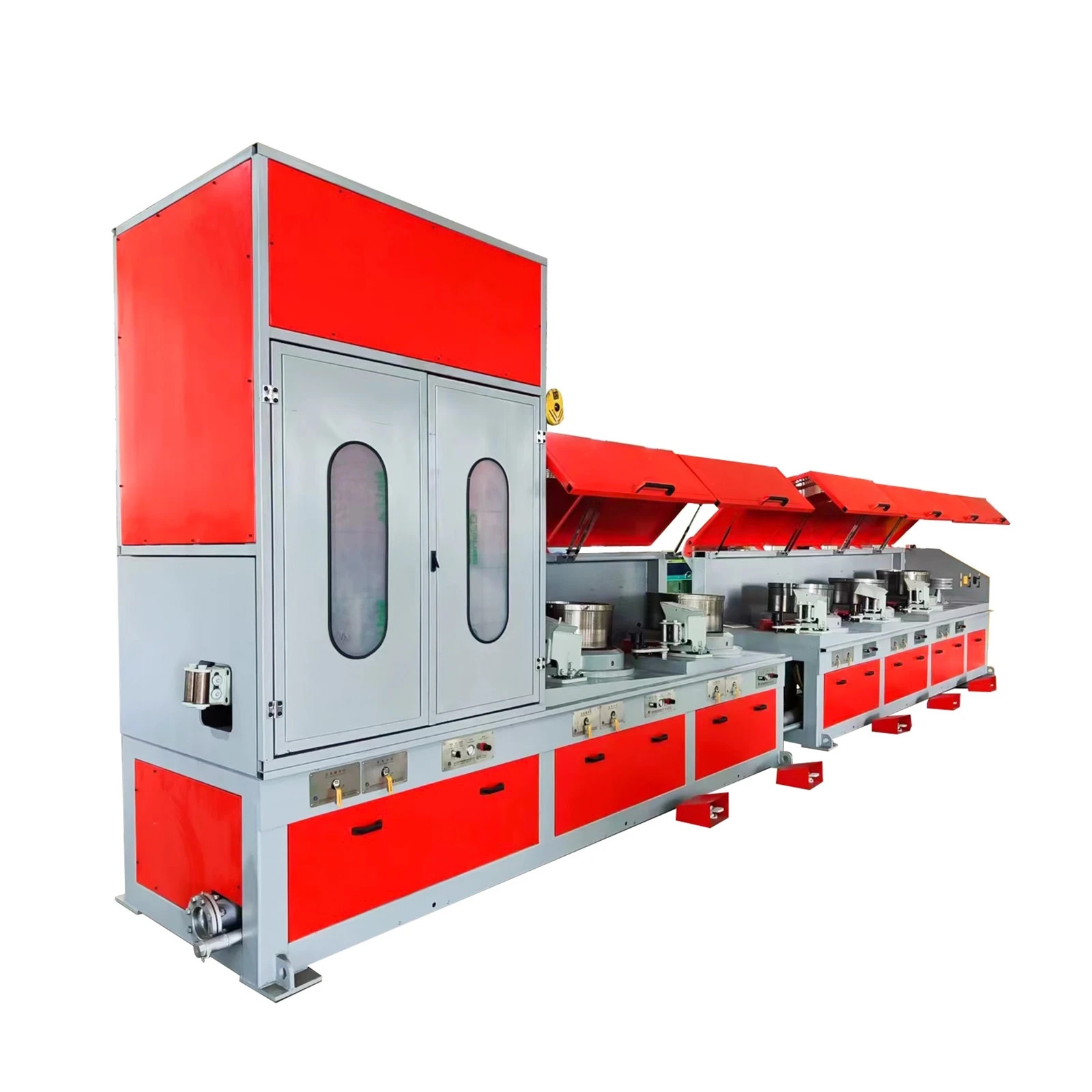
The current mainstream production process of annealed bead wire involves the following core steps:
Raw material preparation: Select high-carbon steel wire rods that meet quality standards, inspect and eliminate defects such as rust and cracks. The latest industry technology adjusts the alloy composition of the wire rods to reduce carbon content while ensuring wire strength, balancing ductility and cost.
Pre-treatment: Preliminary cleaning of the wire rods to remove surface impurities.
Drawing: Through multiple cold drawing processes, gradually draw the wire rods thinner to the target specifications. During the cold drawing process, the wire undergoes plastic deformation, resulting in finer grains, significant improvement in strength and hardness.
Tempering treatment: Improves the internal structure of the steel wire, achieving a better balance between toughness and strength, replacing the earlier inferior cold drawing process. Currently, the industry has replaced the traditional lead bath quenching with electromagnetic induction heating, which is more environmentally friendly.
Electroplating: Through improved electrolytic pickling and electroplating processes, a copper-tin or brass coating is formed on the surface of the steel wire, enhancing the bonding force between the steel wire and rubber and the corrosion resistance. The optimized process can increase the electroplating speed, increase the coating thickness, and improve production efficiency and the quality of the steel wire.
Post-treatment: Successive acid washing and alkali washing to remove impurities and oxides, followed by chemical coating treatment and resin coating to further optimize the surface performance of the steel wire.