


Spool Take-up Unit
Why Choose Us
Hebei Hylite Machinery Co., Ltd. is located in the center of the Beijing-Tianjin-Hebei economic & technological region - Xianxian Economic Development Zone, where is the birthplace of motto "Seeking Truth From Facts".
Products Sell Well
Our products have been exported to more than 60 countries including Togo, South Korea, Vietnam, Cambodia, Thailand, Malaysia, Philippines, Indonesia, India, Pakistan, Iran, Saudi Arabia, Russia, Egypt, Senegal, Mali, Benin, Niger, Venezuela, Argentina, Algeria, Mozambique, Mauritius etc.
Professional Team
The factory covers an area of 50 acres. We are engaged in the R&D, manufacturing and sale service of equipment for steel bar and metallic wire processing. The R&D team mainly composed of Chinese and Italian designers. It has a professional global after-sales service team.
Quality Assurance
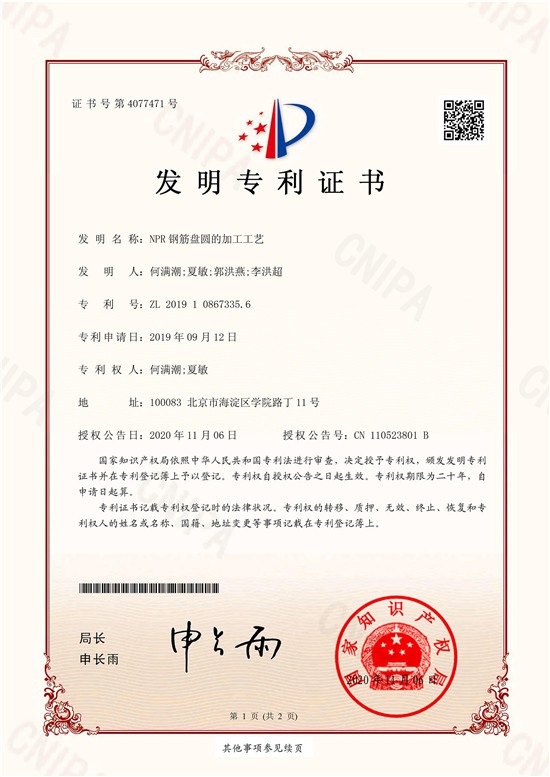
The company has passed ISO9001 quality management system and got its CE certification. It is a certified high-tech enterprise in Hebei Province, China.
After-Sales Service
Provide customers with a full range of technical services and support, provide customers with on-site installation guidance free of charge, and train personnel to familiarize themselves with the operation and use of the equipment. If there are quality abnormalities in the equipment, we will provide 24-hour after-sales service to customers.
What is Spool Take-up Unit
Programmable Take-ups are servo motor driven moving spool systems that pull with precise tension control as low as 5g while producing neatly wound spools of material. They are programmed through a touchscreen interface and can store hundreds of recipes for quick setup and changeover. If you want to know the specifications and prices of Spool Take-up Unit, please contact us!


Advantages of Spool Take-up Unit
Efficiency
Cable spooling machines greatly improve efficiency compared to human techniques by easing the process of handling cables. Machines like this automate the tedious and error-prone process of winding cables by hand so you can spool wires with ease and speed.
For instance, in large venues such as stadiums or convention centers, setting up for major events can involve extensive cable management. With a cable spooling machine, setup times are slashed, enabling quicker and more efficient event execution.
Reduces Cable Damage
Untangling wires is a major pain point in cable management. In addition to being a major pain to untangle, they can cause harm in the long run. By neatly wrapping cables into spools in a systematic way, cable spooling machines solve this issue.
Having all of your wires neatly wound up on spools and ready to go must be a huge weight off your shoulders. You can avoid damaging your cables while storing them for later use or moving them to various places. This will extend the life of your cables and save you money on replacements.
Saves Time
Time is of the essence, particularly in dynamic settings when each second is critical. Cable spooling machines provide time-saving benefits that can be quite beneficial in a variety of contexts.
For example, consider the building trades. Manually installing all of the wiring and cabling for a construction project can be a huge pain. When construction workers use a cable spooling machine, they can speed up the process, which helps them finish projects more effectively and fulfill tight deadlines.
Additionally, being able to rapidly spool and deploy cable can be the difference between a successful event and a logistical nightmare in sectors like film production or event management, when time is the key.
Makes the Space Look Organized
Finally, cable spooling machines help in better cable arrangement and storage. The cables are not lying around in a disorganized fashion but are instead coiled neatly onto spools, which facilitates their storage and transportation.
Consider a workshop or storage facility where rows upon rows of neatly packed cable spools display various types and lengths of cable. This improves the appearance of the room while also making it simpler to find and collect cords as required.
Not only that, but well-organized cable storage lessens the chances of tripping hazards and damage from unkempt storage.
Versatility
Cable twisting machines are not confined to a single kind of cable or wire, making them very flexible. They can handle a variety of cable and wire types, such as single-core, multi-core, and armored cables. This adaptability enables producers to make a wide range of cables and wires with a single machine, saving time and money.
Types of Spool Take-up Unit
Bobbin Winders
These machines are used to wind, thread, and other small-diameter materials onto bobbins. They are typically used in textile manufacturing and can be operated manually or automatically.
Coil Winders
These machines are used to wind wire, cable, and other materials onto coils. They are often used in the electrical and electronic industries and can be programmed to wind specific lengths and diameters of material.
Reel Winders
These machines are used to wind large-diameter materials, such as rope and cable, onto reels. They are often used in industries such as construction, mining, and shipping.
Traverse Winders
These machines are used to wind materials such as yarn, thread, and wire onto spools or cones. They are equipped with a traverse mechanism that moves the spool or cone across the winding drum to ensure an even winding of the material.
Automatic Winders
These machines are used to wind materials onto spools or reels automatically. They are equipped with sensors and other devices that detect the presence and position of the spool or reel, as well as automatic winding mechanisms that can adjust the winding speed, tension, and other parameters as needed.
Precision Winders
These machines are used to wind highly precise and consistent materials, such as fiber optics and medical tubing. They are equipped with advanced sensors and control systems that allow for precise winding of the material, with minimal variations.
Setup Spool Take-up Unit
Holding the spool from below (rather than by the rim), place it on the spool assembly, aligning the hole on the spool with the dowel on the wire feeder. This helps maintain the wire tension on the feeder. If it isn't preset, set the hub tension on the spool to ensure it doesn't unwind when welding stops.
Be sure to account for the inlet guide angle to determine the direction the wire should feed. If the guide is at an angle, the wire should feed from over the top of the spool. If the gun is flat, the wire needs to feed from underneath the spool. Proper wire direction helps prevent drive roll slippage, excess wear on inlet guides and possible bird-nesting. Put the retaining clip in place to secure the spool.
Open the drive rolls via the knob on the wire feeder, and be sure to have the correct ones for the type of wire being used. Typically, gas- and self-shielded flux-cored wires, and metal-cored wires use V-knurled drive rolls. Solid wires pair with V-groove drive rolls. Aluminum wires use U-groove drive rolls.
If the spool of wire is new, snip the short, bent end of the wire that has been secured to the spool so the wire is straight. Take care to keep a good hold on the wire so that it doesn't unspool. Feed the wire through the first inlet guide, the first set of drive rolls, the intermediate guide through to the second set of drive rolls and into the power pin at the back of the MIG gun. As with the drive rolls, be sure to have the correct type and size of inlet guide. Use plastic guides for aluminum wire and steel guides for other styles of wire. Inlet guides usually come with drive rolls and are designed to be slightly larger than the diameter of wire.
Close the feeder housing on the wire feeder and set the drive roll tension by turning the knob on the wire feeder. A good rule of thumb is to set the tension until it is one half turn past the wire slipping. Avoid overtightening the drive rolls, as this can deform the wire and lead to mechanical wear of the contact tip, arc wander and other feeding issues.
Jog the wire until it feeds through the length of the MIG gun. Place the contact tip over the wire and tighten. Then add the nozzle. Test the drive roll tension by feeding the wire into a gloved hand while curling the wire into a small ball. The wire should feed smoothly without slipping.
Understanding the Common Causes of Machine Breakdowns
Lack of Proper Maintenance
Regular maintenance is the backbone of machine reliability. Failure to adhere to scheduled maintenance routines, including inspections, lubrication, and part replacements, can lead to accelerated wear and unexpected failures.
Wear and Tear
Over time, components within machines naturally degrade due to friction, heat, and stress. Without timely replacement of worn-out parts, such as belts, bearings, and seals, the risk of breakdowns increases significantly.
Improper Lubrication
Adequate lubrication is essential for reducing friction, dissipating heat, and preventing premature component failure. Insufficient or improper lubrication can result in increased friction, overheating, and eventual breakdowns.
Environmental Factors
Harsh environmental conditions, such as extreme temperatures, humidity, dust, and chemical exposure, can accelerate corrosion and wear on machine components. Protective measures, such as sealing, ventilation, and corrosion-resistant coatings, are necessary to mitigate these effects.
Operator Error
Human error, including improper operation, overloading, and misuse of equipment, can contribute to mechanical stress and damage. Comprehensive training programs and clear operating procedures are essential for minimizing the risk of operator-induced breakdowns.
Electrical and Electronic Failures
Electrical components, such as motors, switches, and circuitry, are susceptible to malfunctions due to voltage fluctuations, overloads, and component aging. Regular inspection and testing of electrical systems are vital for detecting and addressing potential issues proactively.
Material Contamination
Contaminants, such as dirt, debris, and foreign particles, can infiltrate machinery and interfere with its operation. Proper cleaning and filtration systems are necessary to prevent material contamination and preserve machine integrity.
By understanding these common causes of machine breakdowns, businesses can implement preventive maintenance strategies tailored to their specific equipment and operational needs. Proactive maintenance not only reduces downtime and repair costs but also enhances overall operational efficiency and reliability. Remember, investing in maintenance today can save significant time and resources tomorrow.
Our Factory

Certificate


Frequently Asked Questions
Hot Tags: spool take-up unit, China spool take-up unit manufacturers, suppliers, factory, co2 welding wire, welding wire, Other Machines, Intelligent Take up machine, nail producing machine, wire nail machine
Previous
Spool Take-up UnitNext
Sand blasterYou Might Also Like



Send Inquiry